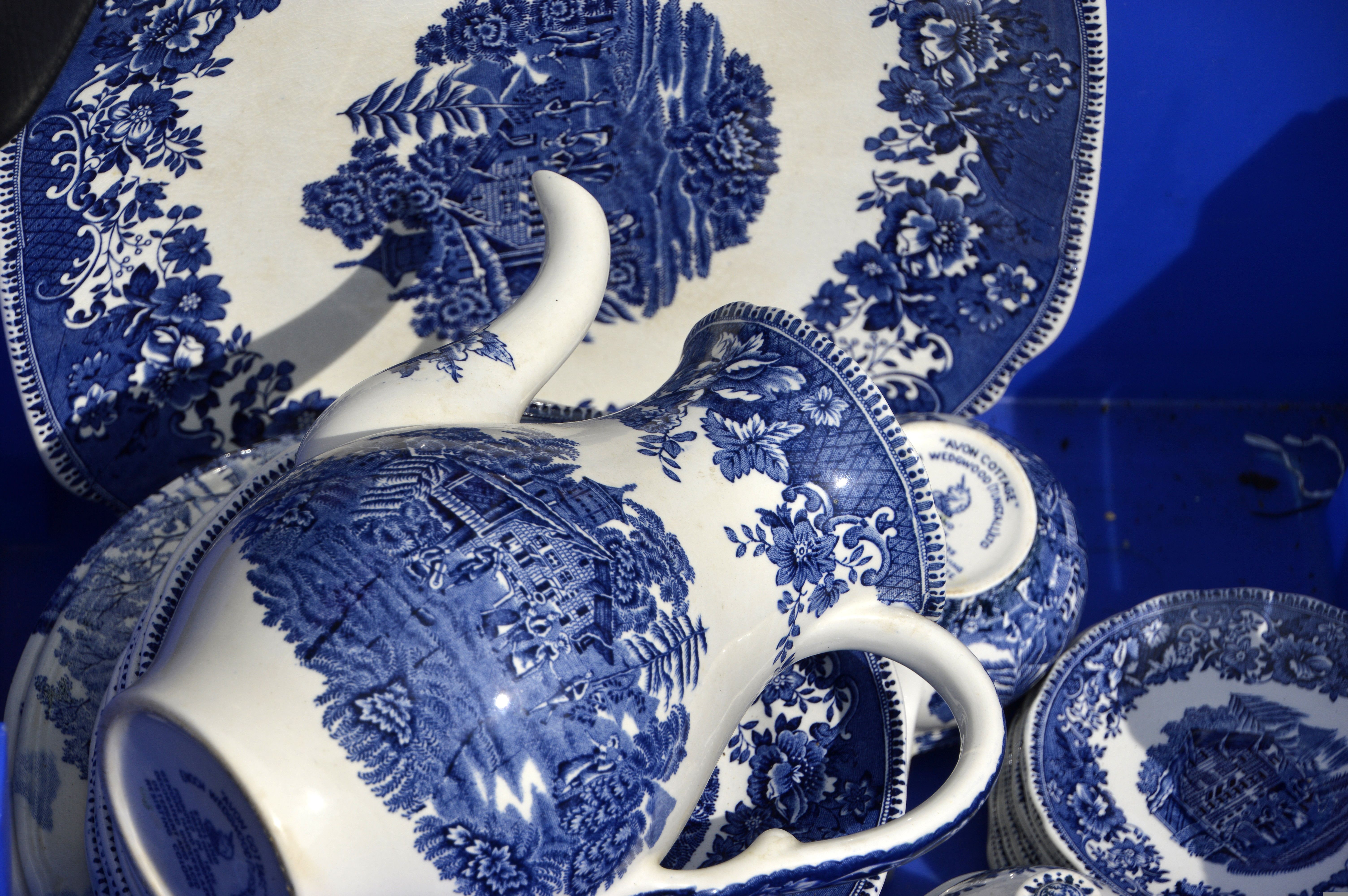
Jaipur's cobalt-and-white glazed pottery made from quartz paste, without clay.
From the Journal
Blue Pottery
From Persian Sands to Rajasthani Skies: The Epic Journey of Azure Art
Imagine a ceramic art so unique that it doesn't use a single pinch of clay.
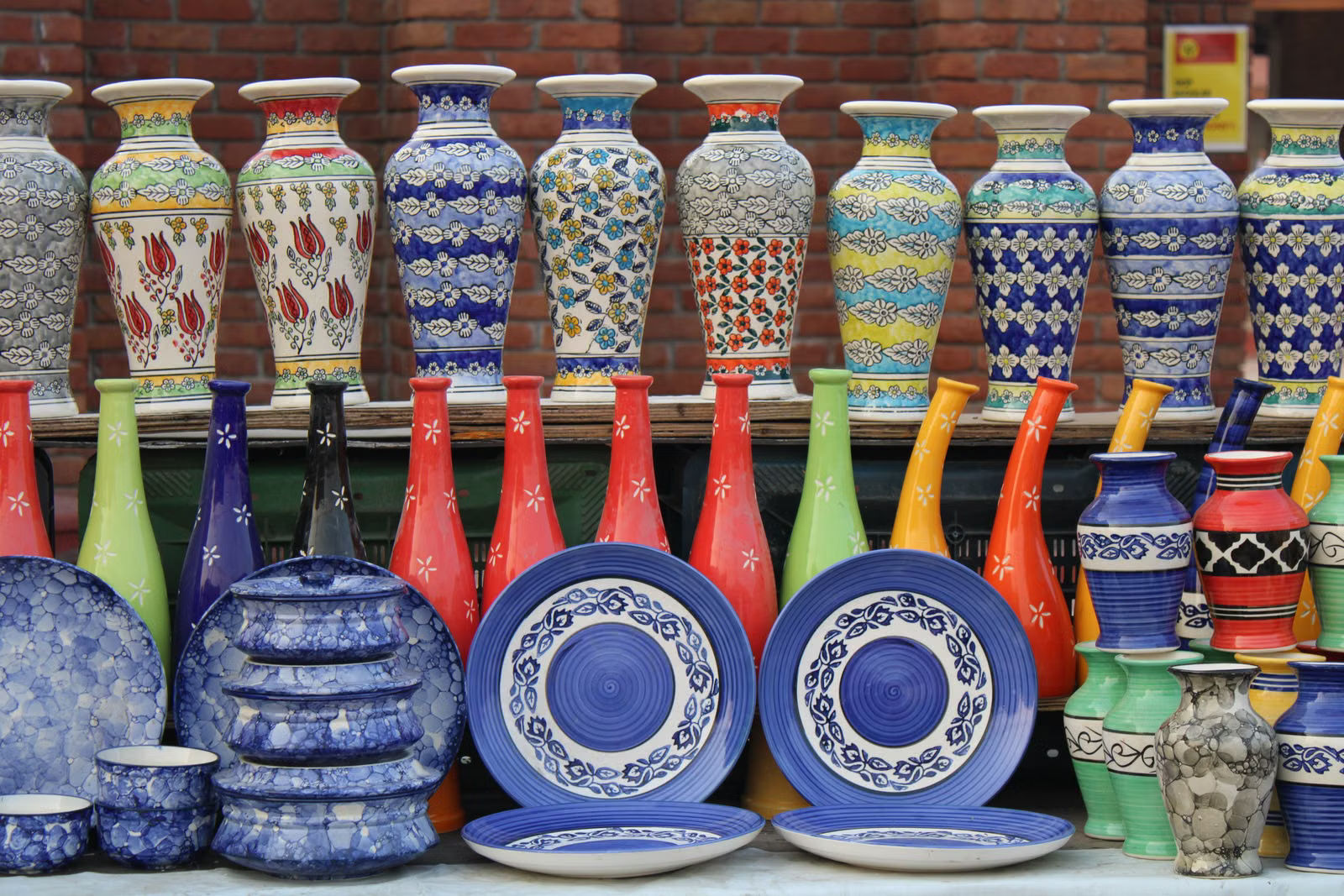
Step into the world of Jaipur Blue Pottery—a breathtaking, centuries-old craft defined by its brilliant cobalt blues, striking turquoise hues, and intricate hand-painted motifs. More than just home decor, each piece is a slice of royal history, a testament to human patience, and a stunning statement of slow, conscious luxury.
There is a moment of pure magic that happens inside the kilns of Jaipur.
Before the fire is lit, the objects tucked away inside look dull and uninspiring—coated in a chalky, greyish paste and painted with muted, earthy minerals. But as the heat rises, a spectacular transformation takes place. The fire melts the glass, fuses the quartz, and wakes up the minerals. When the kiln doors finally open, what emerges is nothing short of breathtaking: a sea of brilliant cobalt blues, glowing turquoises, and glossy, glassy finishes that capture the light like trapped sunshine.
Blue Pottery — Indian folk & tribal art | ArtisticHues
This is the world of Blue Pottery, an art form that defies the very definition of ceramics.
When we think of pottery, we inevitably think of clay, spinning wheels, and messy hands. But Blue Pottery is one of the only ceramic arts in the world that uses absolutely no clay.
Instead, artisans brew a unique, dough-like mixture of quartz powder, raw glass, borax, and gum. Because this mixture lacks the elasticity of regular clay, it cannot be spun on a potter's wheel. Every single vase, bowl, and bead must be painstakingly pressed into molds by hand, dried under the fierce Rajasthani sun, and meticulously smoothed out with stones and sandpaper.
It is a slow, meditative process. A single piece can take weeks to complete, passing through the hands of master craftsmen who treat the material not as mud, but as a canvas for the soul.
From Persian Courts to the Pink City
While Blue Pottery is synonymous with the pink city of Jaipur today, its roots actually trace back to Persia. The technique travelled along the Silk Road and entered India through the grand courts of the Mughal Empire in the 19th century, where it found a passionate patron in Maharaja Sawai Ram Singh II. He was so enchanted by the art that he sent local craftsmen to Delhi to learn the technique, permanently planting its roots in the heart of Rajasthan.
When you buy a piece of Blue Pottery, you aren't just buying a vase or a plate; you are keeping a royal, centuries-old legacy alive.
How It's Made
Blue Pottery is created through a painstaking, multi-step hand-molding process.
The secret lies in the "dough." Artisans blend quartz powder, raw glaze, glass cullet, borax, and water to create a unique paste.
• The Mold: The dough is rolled out and set into molds.
• The Canvas: Once dried, the surface is smoothed, and master artisans use fine brushes to hand-paint exquisite floral and animal motifs using natural mineral oxides.
• The Fire: Finally, the pieces are coated in a special glaze and fired in low-temperature kilns. In the kiln's heat, the dull minerals magically transform into the vivid, glossy blues and greens we adore.
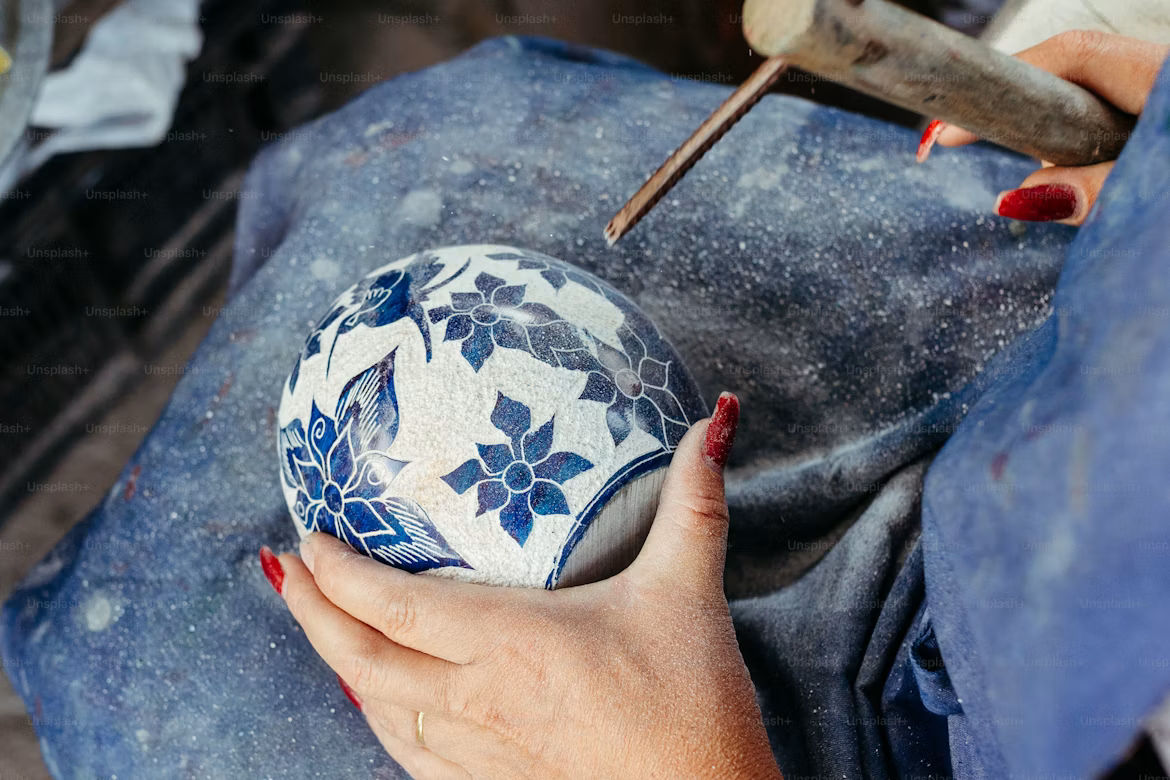
The true heartbeat of Blue Pottery lies in its artistry. Once the "clayless" body is prepared, it is handed over to painters who possess the kind of steady hands that only decades of practice can bring. Using fine brushes, often made from squirrel hair for ultimate precision, they paint freehand. They weave stories of nature across the curved surfaces—intricate floral vines, majestic peacocks, and geometric Persian lattices. They paint using natural metal oxides: cobalt oxide for that signature deep blue, and copper oxide for the vibrant, translucent turquoise.
Making of Blue Pottery · Unsplash License, via Unsplash
Because every line is painted by a human hand, look closely, and you will see the charming whispers of the artist—a slightly thicker line here, a tiny glaze skip there. These aren't imperfections; they are the beautiful, authentic fingerprints of a dying art form.
Perfect Imperfections
In a world dominated by mass-produced, identical plastic goods, bringing Blue Pottery into your home is an act of beautiful defiance. It is an embrace of "slow living."
Because authentic Blue Pottery is entirely handmade, no two pieces are ever identical. Genuine pieces are surprisingly heavy and have a slightly rough, unglazed base. Look closely and you might spot tiny pinholes, slight variations in the paint, or minor glaze runs. These aren't defects—they are the beautiful, authentic fingerprints of the artisan who made it. These pieces don't just sit on a shelf; they invite conversation, command attention, and bring an undeniable warmth to a space.
Because Blue Pottery is made without clay and is low-fired, it behaves a bit differently than your standard stoneware or porcelain. It is incredibly durable and its colors will literally never fade, but it is also more brittle and sensitive to temperature changes.
Styling Blue Pottery in the Modern Home
Blue pottery is a bridge between a glorious past and a conscious future. They blend seamlessly into contemporary spaces:
• The Statement Centerpiece: A large blue pottery bowl filled with fresh flowers instantly elevates a minimalist dining table.
• Functional Art: Replace mundane daily items with hand-painted soap dispensers, vibrant coasters, or intricate ceramic drawer knobs to bring a pop of joy to everyday routines.
• The Thoughtful Gift: Skip the generic gift cards. A hand-painted planter or vase makes a deeply personal, heritage-rich gift for housewarmings or weddings.
Hand-Wash Only
Never put Blue Pottery in the dishwasher. The intense heat, high water pressure, and harsh chemical detergents can easily chip the delicate glaze or cause micro-cracks over time.
How to clean: Use a soft sponge, warm water, and a mild, gentle liquid soap.
How to dry: Gently pat dry with a soft microfiber cloth or let it air-dry on a soft kitchen towel.
Guard Against "Thermal Shock"
Because it is a quartz-based, low-fired ceramic, Blue Pottery does not expand and contract well when exposed to sudden, extreme temperature swings.
Avoid the microwave and oven: Never use these pieces to cook or heat food.
Mind the heat: Do not pour boiling hot liquids (like tea or soup) directly into a cold blue pottery mug or bowl. Conversely, don't run a warm dish under freezing cold water.
Handle with Care
Think of Blue Pottery as functional glass art. It is tougher than it looks, but it lacks the elastic "give" of traditional clay.
Avoid clashing: Be careful not to clink pieces against the sink faucets or other dishes while washing.
Storage smarts: If you are stacking blue pottery plates or bowls, place a soft felt liner, a piece of fabric, or a paper towel between each piece to prevent the unglazed, rough bases from scratching the glossy glaze of the piece beneath it.
Keeping Planters & Vases Happy
Blue pottery makes for stunning planters and vases, but because the material is slightly porous beneath the glaze, long-term water stagnation needs a little care.
For Vases: Change the water every couple of days rather than letting it sit stagnant for weeks.
For Planters: Always ensure your planter has a proper drainage hole at the bottom so water doesn't pool inside and seep into the core body, which can weaken the structure over many years. Alternatively, use a plastic liner pot inside the blue pottery planter.
Over years of love and use, you might notice very fine, hair-like lines under the glossy glaze (known as crazing). This is a completely natural characteristic of low-fired quartz ceramics and does not affect the structural integrity of your piece—it simply adds to its vintage, hand-crafted character. Every purchase of authentic Blue Pottery directly supports the artisan communities of Rajasthan, ensuring this incredible, eco-friendly craft survives for generations to come.
The gallery
Pieces in Blue Pottery
Curating
No pieces listed yet
We're curating Blue Pottery pieces from talented makers. Check back soon!
Add your perspective
Practice Blue Pottery differently?
Every region carries its own variant — different motifs, different techniques, different stories about why we make this. Tell us how Blue Pottery lives where you’re from.